
Telematics without specific hardware
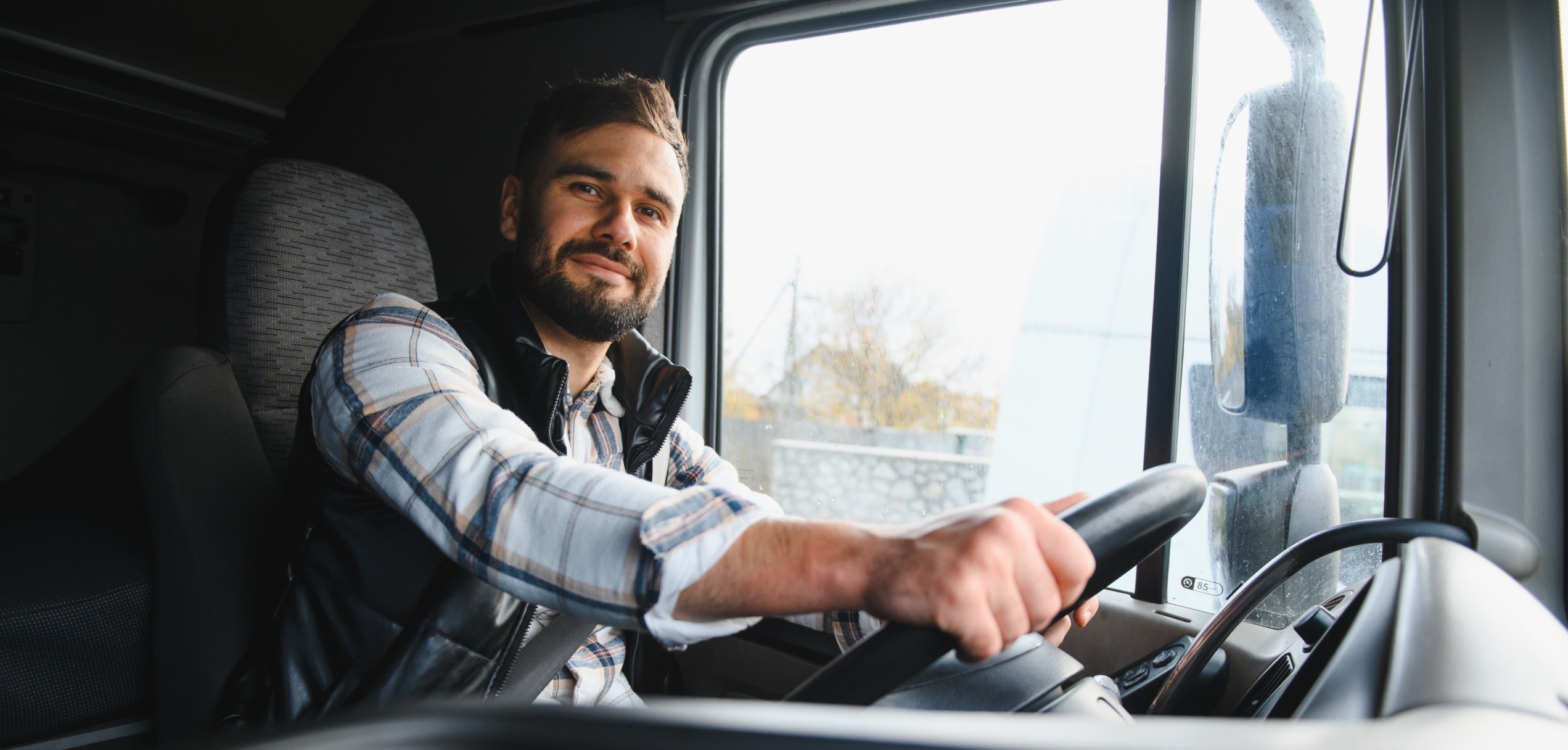
How easy it is to integrate subcontractors into your own supply chainHeading
Anyone who has been involved in the transport and telematics industry for many years will perhaps still remember that the somewhat bulky “telematics cases” used to be used to integrate subcontractors or rental vehicles into the digital supply chain.
These mobile solutions were temporarily connected to the cigarette lighter in the driver’s cab without being permanently installed. The cases enabled real-time tracking and connection to the company’s own transport management system (TMS).
One of the disadvantages of the costly solution was that it was not suitable for the spot market. After all, returning the devices requires regular personal contact.
This is why telematics cases were mainly found in local transport. In addition, smaller transport companies or sole traders are often unwilling to install additional hardware – especially if they work for different clients.
The widespread use of smartphones and tablets in the cab has opened up completely new possibilities for integrating subcontractors into the digital supply chain: Telematics without specific hardware, based on driver apps and powerful app servers.
Driver apps as a key technology
Driver apps such as pLG Drive from proLogistik transform commercially available smartphones into fully-fledged telematics devices. They enable the recording and transmission of position data, status messages, order information and even driving behavior – without any additional hardware. This means a considerable advantage for the integration of subcontractors: the barrier to entry is drastically reduced.
Implementation is extremely simple: the subcontractor or driver downloads the pLG Drive app, registers and gains access to the tours assigned to them. Via an intuitive user interface, they can view orders, submit status messages (e.g. “arrived”, “loaded”, “delivered”) and, if required, digitally record documents such as delivery bills and parking permits.
Last but not least, the pLG Drive app and the integrated photo function can be used to document damage directly on site. The data records generated in this way can be forwarded directly to the dispatcher and the person responsible for settling the claim. This significantly streamlines internal processes.
Another advantage is that the data is always up to date. Thanks to the smartphone’s permanent connection to the mobile network, information can be transmitted in real time. This not only improves transparency along the supply chain, but also enables proactive control in the event of delays or disruptions.
Advantages of driver apps like pLG Drive
- Commercially available smartphones become fully-fledged telematics devices
- Recording and transmitting position data, status messages and order information
- Digitization of delivery bills and parking permits
- Integrated damage documentation and simplified damage management
- Minimal entry hurdle for subcontractors thanks to simple implementation
- Data access only to the assigned tours
- Intuitive user interface (pLG Drive)
- Status messages are recorded digitally
- Highly up-to-date data
- Improved transparency along the supply chain
- Proactive control in the event of delays or faults
The role of app servers in the background
While the driver app forms the interface to the user, the app server takes on the central control and integration function. It is the heart of the entire solution and ensures that all data is processed securely, reliably and scalably.
App servers act as an intermediary between the drivers’ mobile devices and the client’s backend systems. These can be transport management systems (TMS), telematics solutions such as pLG Telematik or warehouse management systems (WMS). They bundle the incoming data streams, validate them and make them available in a structured form for further processing.
A key advantage of modern app servers is their ability to integrate easily via standardized interfaces (APIs). This means that even heterogeneous IT landscapes can be easily connected. For companies, this means that subcontractors can be integrated into existing processes without any major technical effort.
App servers also offer functions such as user and rights management, multi-client capability and security mechanisms to ensure compliance with data protection regulations. Particularly in the context of the GDPR, it is essential that personal data – such as location information – is transmitted and processed in encrypted form.
Advantages and functions of app servers
- Central control and integration function
- Ensure that data is processed reliably and scalably
- Intermediary between the drivers’ mobile devices and the client’s back-end systems
- Bundling, validating and structuring incoming data streams
- Simple integration via standardized interfaces (APIs)
- Easy connection of even heterogeneous IT landscapes
- User and rights management
- Multi-client capability
- Security mechanisms for compliance with data protection regulations
Rapid scalability and high flexibility
A key advantage of a hardware-free telematics solution such as pLG Telematik is its scalability. New subcontractors can be connected within a few minutes – without lead times for hardware procurement or installation. This is a decisive competitive advantage, particularly at peak times, for example in seasonal business or for large orders at short notice.
Flexibility in operational business also increases. Tours can be dynamically adjusted, orders can be reassigned at short notice and changes can be communicated in real time. Driver apps also support navigation functions, digital checklists and photo documentation, which further increases the quality of service provision.
Transparency and control in the supply chain
The integration of subcontractors via driver apps creates a high degree of transparency. Dispatchers receive a consistent overview of all ongoing transports – regardless of whether they are carried out with their own vehicles or external partners.
Status messages and position data enable precise shipment tracking and improve communication with customers.
At the same time, companies retain control over their processes. Defined workflows and standardized processes ensure that external partners also work according to the same quality standards as the company’s own fleet. Deviations can be identified and addressed at an early stage.
Challenges and success factors
Despite all the advantages, there are also challenges that should be taken into account during the introduction. These include acceptance by drivers in particular. A user-friendly app such as pLG Drive, low technical hurdles and clear added value in everyday working life are crucial to achieving a high usage rate.
Data quality also plays a key role. Only if status messages are recorded reliably and correctly can the solution deliver its full benefits. Training and clear process guidelines are important success factors here.
Last but not least, IT security is a critical issue. Companies should ensure that both the app and the app server comply with current security standards and are updated regularly.
Telematics without hardware: challenges and success factors:
- Acceptance among drivers
- User-friendliness of the driver app
- Low technical hurdles
- Clear added value in everyday working life
- Data quality
- Training and clear process guidelines
- IT security of app and app server
Conclusion
Telematics without specific hardware is more than just a technical trend – it is the prerequisite for flexible, scalable and transparent supply chains. With driver apps such as pLG Drive and powerful app servers, subcontractors can be integrated quickly and easily into existing systems without high investments or complex implementation projects.
For logistics companies, this means greater agility, better control and higher service quality. In an industry that is increasingly characterized by dynamism and competition, this can make all the difference.
You might also be interested in
More on the topic
Without subcontractors, supply chains would not only collapse in Germany. Freight forwarders in other European countries also rely on subcontractors to fulfill transport orders in the cargo and general cargo sector. No wonder, because so-ca…

What requirements must be met to integrate a telematics system into the existing IT infrastructure? A telematics solution promises significant efficiency gains. These include visibility into vehicle movements, optimized route planning, redu…